Bioenergy 101
Some people tout bioenergy as a solution to our climate crisis. But take a closer look, and this plant and animal power doesn’t actually live up to its promise.
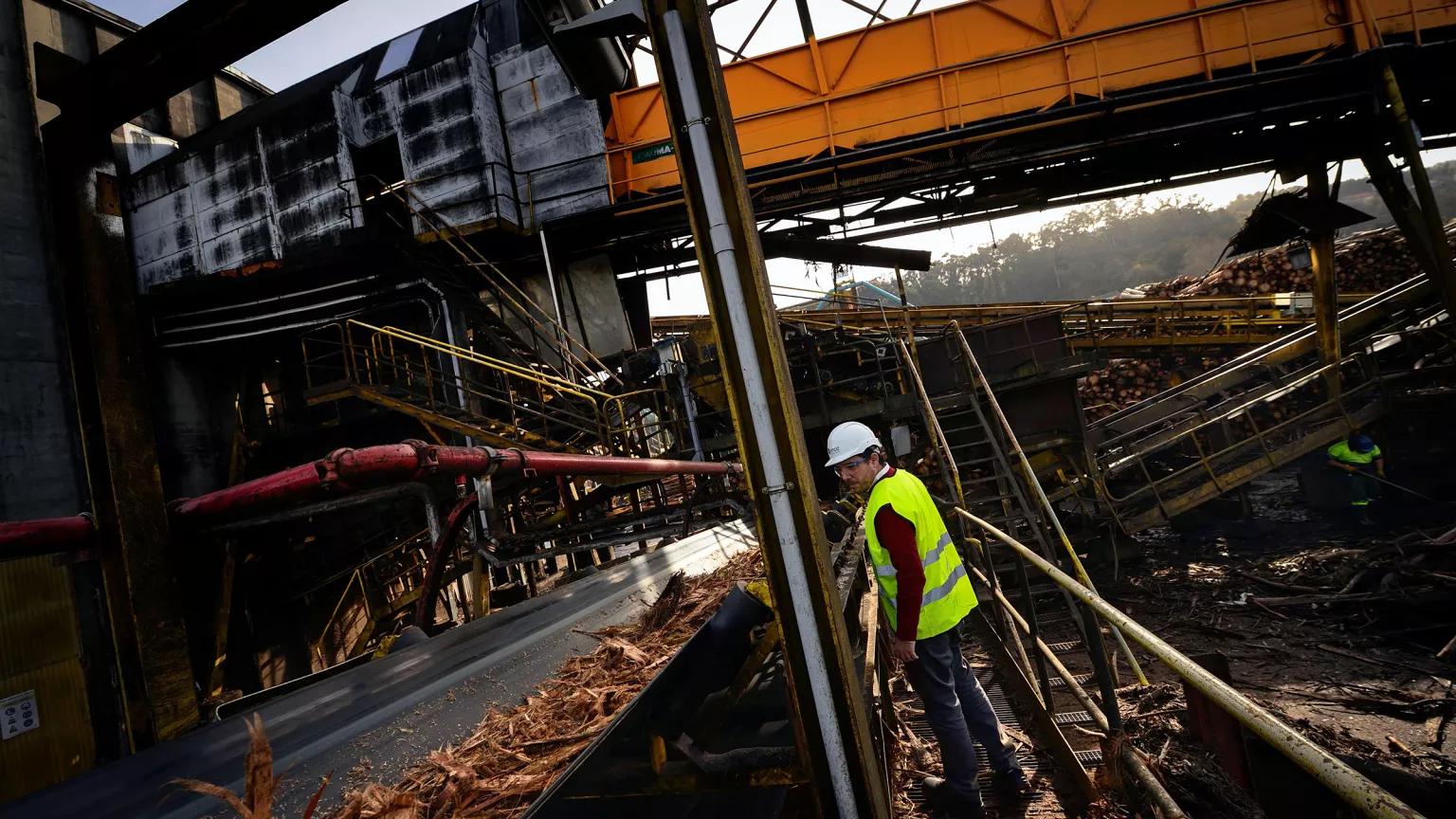
A worker checks the line at a biomass plant in Europe
Miguel Riopa/AFP/Getty

As the world’s population and standards of living in developing countries increase at a rapid pace, so does demand for energy. And because of our reliance on dirty fossil fuels, global average temperatures are climbing as well—making the search for a sustainable way to power our cars, heat our homes, and turn on our lights more urgent than ever.
Bioenergy, a form of energy that is ostensibly renewable and relies on the power of plants and animals, has been touted as a solution. But bioenergy’s green reputation is misleading. It requires inputs and trade-offs that are costly for our ecosystems and our climate. Here’s what you need to know.
What is bioenergy?
Bioenergy is an umbrella term for any energy made from living (or recently living) plants and animals. It’s been around nearly as long as we have; humans invented bioenergy when we first burned wood to keep warm.
What is biomass?
Biomass is bioenergy’s source material, and it varies widely. It ranges from wood and corn (most commonly) to manure, food waste, and even seaweed. But the basic principle is the same: Plants absorb energy from the sun through photosynthesis, and we can harness that energy for our own uses. (Animals absorb—and excrete—that same energy by eating plants, or eating animals that have eaten plants, and so on.)
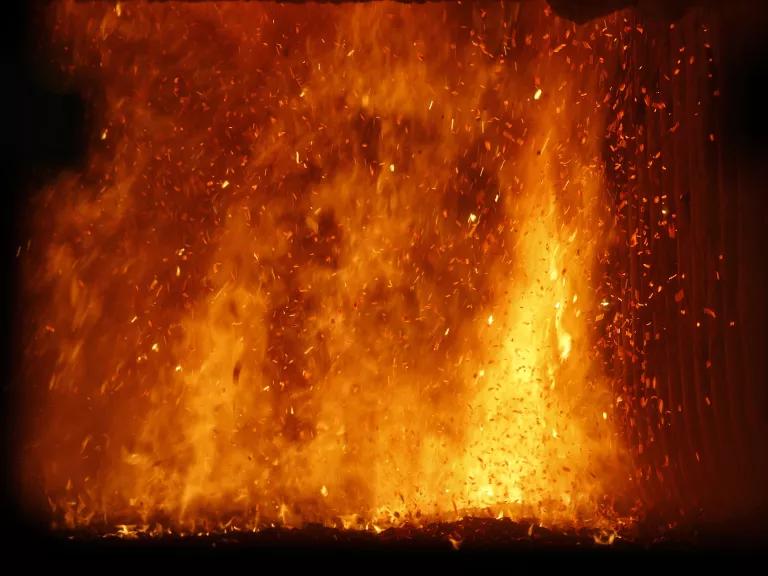
Biomass is burnt at a plant in Europe
Reuters/Russell Cheyne
How is bioenergy made?
Methods for extracting the energy stored in biomass range from simple systems, like a backyard compost pile that generates mild heat as it decomposes, to complex modern technologies capable of processing large quantities of industrial waste and producing enough electricity to power whole towns. But all the methods rely on only a handful of physical processes:
Direct Combustion
As with the original wood-fueled fires, we can use direct combustion to simply burn biomass and generate heat. We can then use this heat directly to, say, warm buildings, as in the case of a biomass boiler room. We can also use this heat to boil water and create steam, which powers turbine generators to produce electricity.
Gasification
This method again uses heat, but with a limited oxygen supply. Biomass like wood chips or municipal waste—meaning garbage including food scraps, animal and plant products, paper, glass, metal, and plastics—is incinerated in a “gasifier,” the specifications of which depend on the type of biomass being used. Under these conditions, biomass becomes “syngas,” which can drive gas turbines. Gasification is considered more environmentally friendly than direct combustion, as it emits fewer pollutants.
Anaerobic Digestion
A fancy name for rotting, anaerobic digestion is simply the breaking down of biomass by bacteria in the absence of oxygen. That biomass is often agricultural waste—say, corncobs or plant stalks—or landfill waste, which is anaerobically digested as garbage degrades. The by-product is methane and carbon dioxide, which can be purified to make biomethane and used as fuel in vehicles. At landfills, piles of waste can be covered with clay to create an anaerobic environment and outfitted with pipes to capture and funnel the gas from inside.
Fermentation
Sugars and starches—found in crops like corn, sugarcane, and beets—can be fermented to make biofuels, such as ethanol, butanol, or methanol, to power vehicles. Cellulosic plants—like wood, grasses, and the stems and stalks of crops—can also be fermented into fuel alcohols, though it takes extra steps to do so.
What can we use to make bioenergy?
As mentioned above, biomass varies widely, especially as we continue to find cheaper and more sustainable alternatives. Here are the most common source materials:
Wood and Wood Waste
For hundreds of thousands of years, wood was our primary form of fuel for heating and cooking, making it the longest-used source of bioenergy. Today we still use wood, to produce heat and electricity. In 2017, wood and wood-derived biomass accounted for 44 percent of all U.S. biomass fuels. (In fact, people often use the term “biomass” to refer to “wood biomass” specifically.)
The wood used for bioenergy can be residue from other industries—like pellets made from the remains of the paper industry. Paper mills will sometimes use their own leftover wood to produce some of the electricity needed for production. But just as often, wood bioenergy comes from clear-cutting forests, which not only is extremely carbon inefficient but destroys a valuable carbon sequestering resource.
Oskari Heimonen/Alamy
Municipal Solid Waste
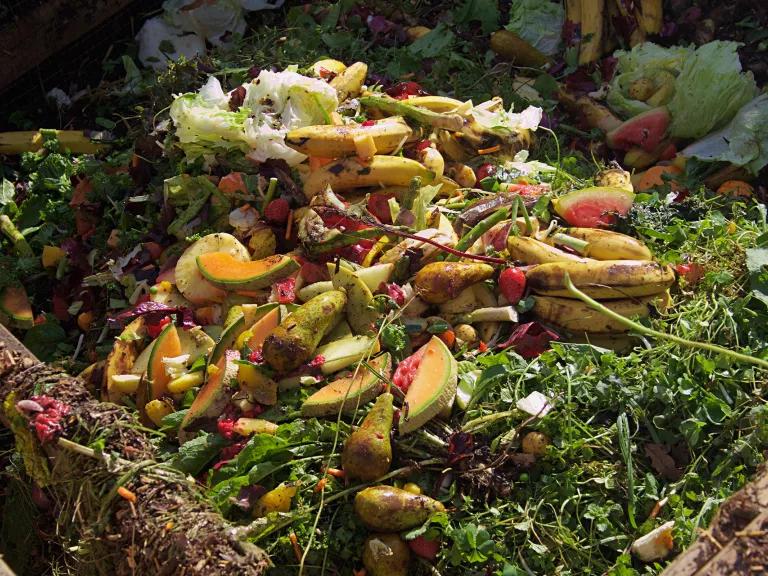
Municipal solid waste includes a wide array of materials, including food scraps, paper products, and petroleum-based plastics. More than half of the municipal solid waste in the United States winds up in a landfill. Nearly 13 percent is combusted to produce energy, as of 2015. Additionally, most large landfills in the United States are required to capture methane from decomposing organic matter; this methane can also be used for energy production.
Although these strategies sound efficient, in fact, generating power this way is an environmental misstep. Recycling, or capturing materials from the waste stream and returning them to production or nutrient cycles (in other words, using them in manufacturing or allowing their nutrients to flow back into a living organism or the environment) is much better for the planet. We should direct our focus and resources away from solid waste as an energy source and toward reducing waste in the first place, and after that, recycling or composting as much as possible.
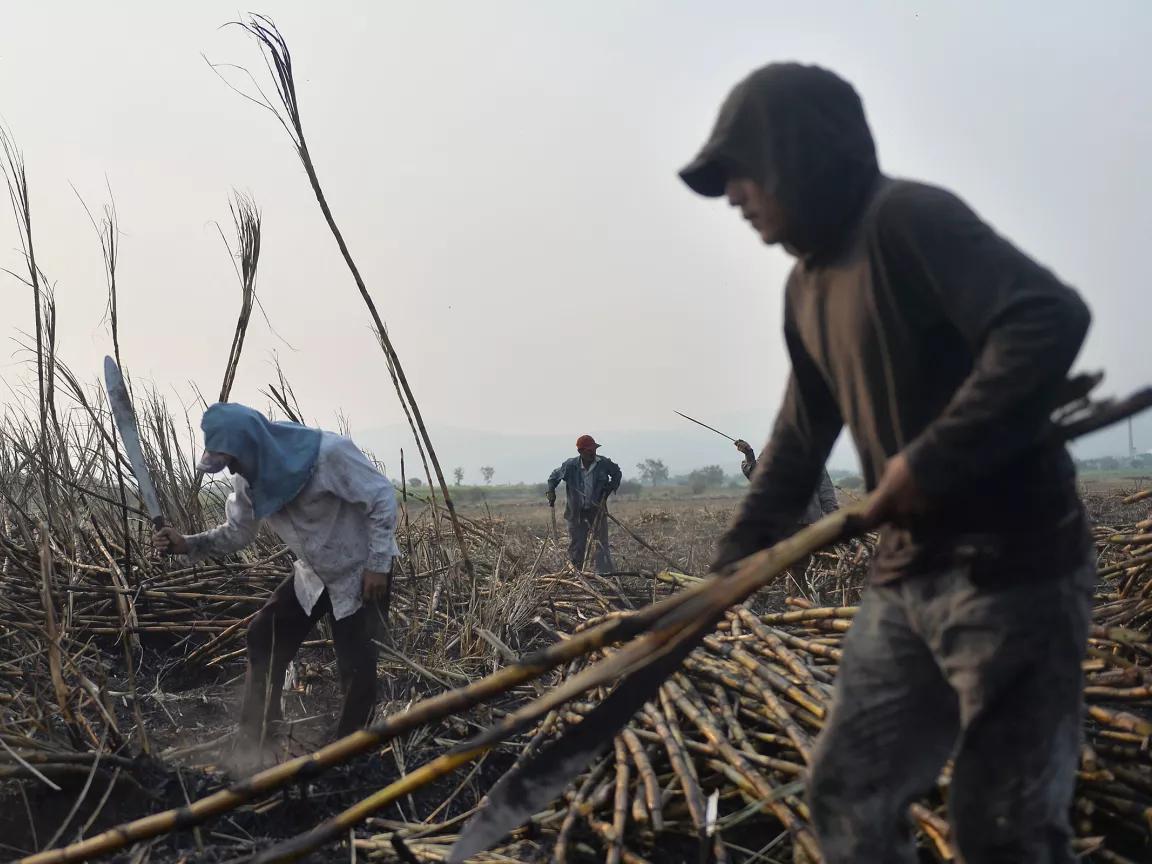
Workers cut sugarcane in Atencingo, Puebla, Mexico
Pedro Pardo/AFP/Getty
Agricultural crops
Food crops—like corn, sugarcane, or beets—can be turned into fuel for vehicles. The most common end product is ethanol, an alcohol fuel made by fermenting the sugars and starches from plants and then distilling them. (New technologies also allow ethanol to be made from woody plants, like trees, grasses, and crop by-products.) Soybean oils can be made into another renewable transportation fuel: biodiesel.
Recycled oils and animal fat
Leftover fats—like used vegetable oils, animal fat, and grease from restaurant kitchens—can all be used to make biodiesel. The final product is made via a chemical reaction called transesterification—or the reaction of a fat molecule with an alcohol.
Common forms of bioenergy
Just as there are many types of biomass, bioenergy’s end products also vary widely. Here are its most common final forms:
Biofuels
Biofuels are intended as an alternative to petroleum for the transportation sector. The aim of their developers and proponents is to replace, or at least offset, petroleum-based gasoline and diesel. Compared with producing fuel from destructive oil drilling, producing it from plants like corn seems like a golden (and green) idea. But not all biofuels are created equal. When greenhouse gas emissions from the full lifecycle of different biofuels are accounted for, and when we consider their impact on water, soil, biodiversity, and food production, replacing gasoline and diesel with biofuels in most contexts becomes much less attractive as a sustainable solution.
The most common liquid biofuels are ethanol and biodiesel. Ethanol is a fuel alcohol made by fermenting sugars and starches from plants, typically corn, soybeans, and sugarcane. Most gasoline in the United States is already mixed with ethanol (typically a 10 percent blend), though mixtures with higher ethanol content can be used in certain “flex fuel” vehicles.
To address some of the environmental issues associated with biofuels, more advanced forms of ethanol that rely on nonfood biomass are being developed, but their cost is currently too prohibitive for them to be considered a viable replacement for petroleum fuel.
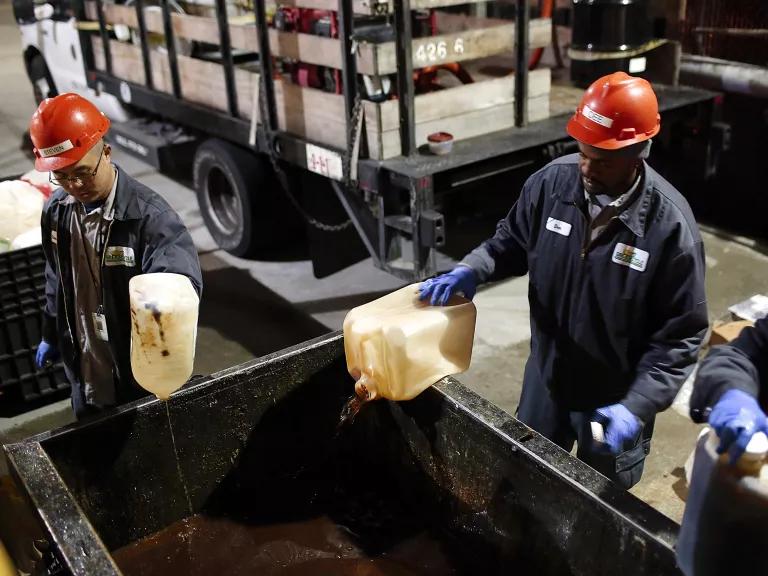
Used cooking oil from restaurants is collected and recycled into biofuel
Justin Sullivan/Getty
Biodiesel is a renewable diesel fuel made from fats like vegetable oil, animal fats, grease, and even recycled oil from restaurants. Biodiesel has about 90 percent of the energy density of petroleum diesel. It is also a cleaner-burning fuel that emits no sulfur, a by-product of burning fossil fuels that contributes to acid rain.
Biodiesel runs only in diesel engines, which are still a relatively small part of the transportation market. And it is still about 150 percent more expensive to produce than petroleum gasoline.
Biopower
Under the umbrella of bioenergy, biopower refers specifically to electricity produced by biomass—most often trees. As mentioned, wood and wood waste can be fed into biopower plants. The heat released by burning the wood material drives turbines, which produce electricity. Because of its potential impact on forest ecosystems, biopower is one of the most controversial forms of bioenergy production.
Biopower advocates make a case for biopower that’s similar to their case for other forms of bioenergy—namely, that it’s renewable and “carbon neutral.” Carbon neutral essentially means that the amount of carbon dioxide a plant or tree absorbs from the atmosphere while growing is equivalent to the amount it releases when burned as fuel. (Carbon dioxide is the primary enemy in the fight against global warming. It stays in our atmosphere and acts as a heat trap for the sun’s radiation, triggering a cascade of serious climate reactions.) Compared with dirty fossil fuels, which release carbon without capturing it, biopower certainly seems like a step up. And trees can always grow back, right?
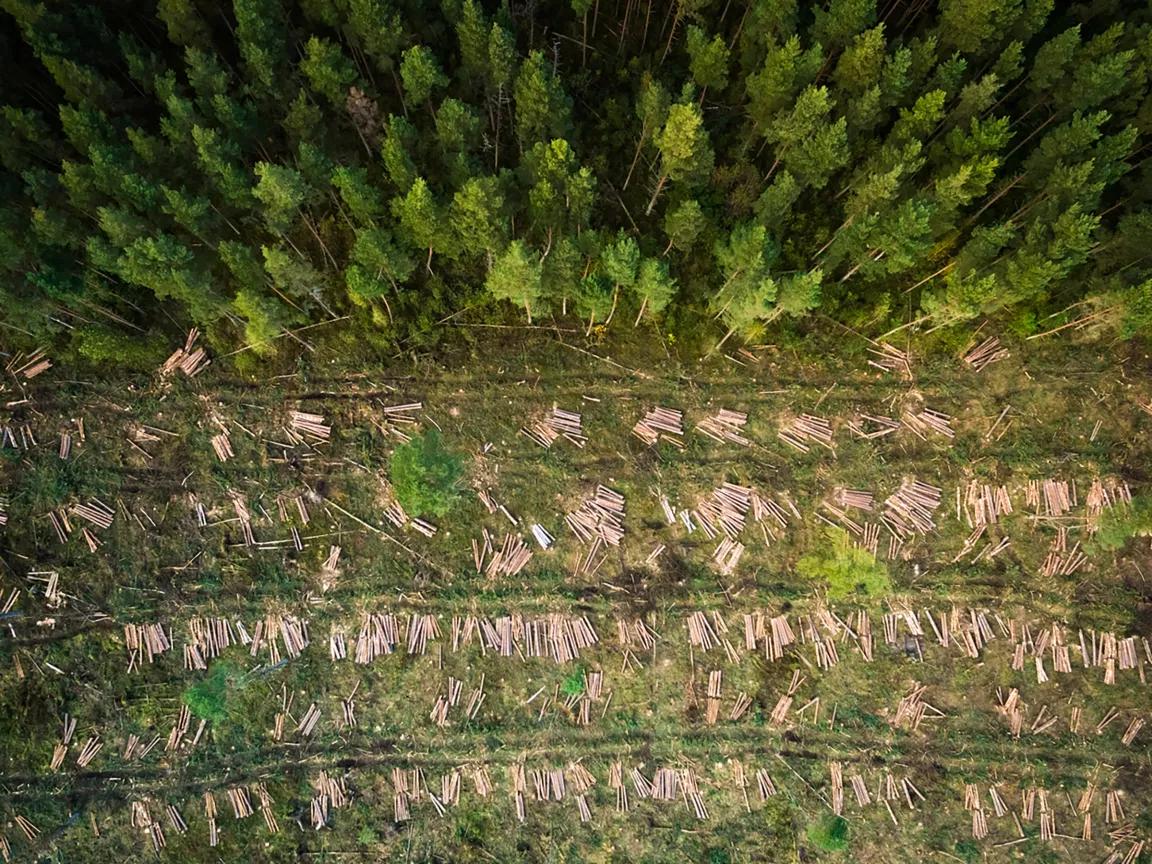
Logging in Estonia
Offset
Not quite. Trees take decades to grow. Clearing forests to produce electricity causes a big outflow of emissions in the short term, as burning all that organic matter releases substantial amounts of carbon dioxide. And double-whammy: Once cleared, the forest is no longer available to soak up more of that carbon from our atmosphere—which is a big deal. In the United States, we rely on the expansion of forest carbon sinks to offset roughly 13 percent of annual global warming pollution.
Moreover, there’s no guarantee that the forests will be replanted at all, or in a way that truly allows for net-zero emissions. Development, or even shifting environmental conditions due to climate change, can waylay those plans, leaving us with a significant carbon surplus.
Though many biopower plants use wood waste from other industries, potentially bypassing this issue, the cheapest way to get wood is still by clear-cutting forests, which also devastates ecosystems and the wildlife that inhabits them. The situation becomes even more complicated when you consider that Europe, which has essentially exhausted its own forests, now imports U.S. wood pellets to meet the demand of its own biopower plants. These pellets, often made from clear-cut trees, are shipped across the Atlantic using petroleum-based fuel.
And of course, there’s the argument that cutting down trees to protect the environment is in itself contradictory.
Bioproducts
Though not technically a form of energy, bioproducts are often swept into the conversation about bioenergy, as their markets are necessarily intertwined. Bioproducts are simply anything made from organic matter—like newspapers, fertilizers, and, most notably, bioplastics, which are made from biomass such as sugars from corn kernels or sugarcane, rather than fossil fuels. Currently, up to 16 percent of crude oil consumption in the United States goes toward making chemicals and products like plastic rather than vehicle fuel. Important to note: Bioenergy plants, which may not make enough money early on to be economically viable, can reduce this risk by supplementing their production of fuel with the production of bioproducts as well.
The future of green energy
Simply put, biomass is not currently a sustainable source of electricity or fuel. In fact, cutting down trees to produce electricity—one of the most common forms of bioenergy—can sometimes increase emissions.
Yes, plants absorb carbon while growing, and in theory this could balance out some of the emissions later when they are burned as fuel. However, harvesting biomass doesn’t just happen. Growing corn for ethanol, planting forests for electricity, or even capturing methane from rotting waste all require significant resources. So claims of carbon neutrality for bioenergy ignore important parts of the picture.
Innovations in solar, wind, and geothermal energy are significantly more promising. These forms of renewable energy perform better than bioenergy where it counts: in reducing carbon emissions. Thankfully, solar and wind are making big technological leaps, allowing us to better capture, store, and transport this energy for less money. For example, a recent study by Georgia Institute of Technology researchers showed that biomass electricity produced by Dominion Energy, a U.S.-based energy company, is still 50 percent more expensive than electricity from onshore wind and utility-scale solar. And countries and cities are doubling down to invest in these real renewables. By pitting itself against these more viable options, bioenergy may be waylaying our best chance for solving the climate crisis. And we simply don’t have time to waste.
This NRDC.org story is available for online republication by news media outlets or nonprofits under these conditions: The writer(s) must be credited with a byline; you must note prominently that the story was originally published by NRDC.org and link to the original; the story cannot be edited (beyond simple things such as grammar); you can’t resell the story in any form or grant republishing rights to other outlets; you can’t republish our material wholesale or automatically—you need to select stories individually; you can’t republish the photos or graphics on our site without specific permission; you should drop us a note to let us know when you’ve used one of our stories.
What Are the Causes of Climate Change?
Biodiversity 101
Climate Change Progress