East
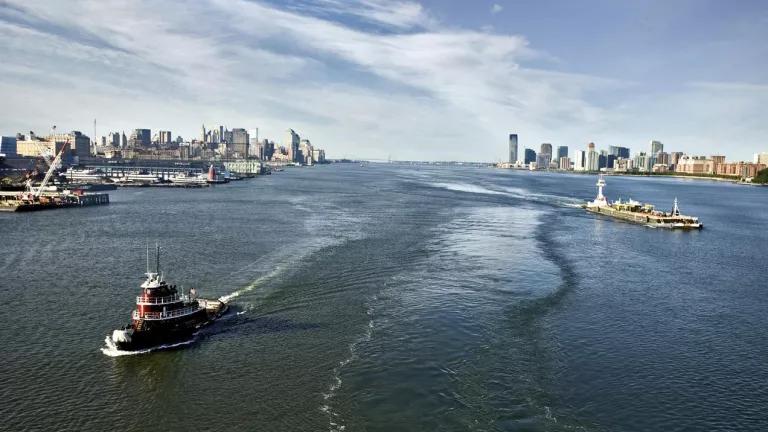
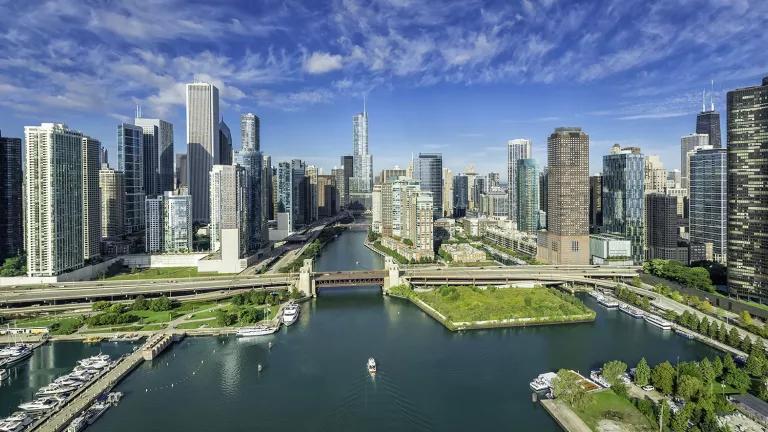
The Hudson River, with the skyline and harbor of Manhattan, New York on the left bank and Jersey City, New Jersey, on the right
iStock
The Northeast is home to majestic wild areas like Acadia National Park and the rugged White Mountains. Throughout this region—including Connecticut, Maine, Massachusetts, New Hampshire, Rhode Island, and Vermont—NRDC works to protect the Atlantic coastline, fight legacy pollutants, combat climate change, and advance clean energy with innovative programs like the Regional Greenhouse Gas Initiative.
The Mid-Atlantic region’s status as a financial, academic, and political powerhouse elevates many of its challenges and solutions—including those around climate change—to the national level. Encompassing the states of Delaware, Maryland, New Jersey, New York, and Pennsylvania, as well as Washington, D.C., this area is home to some of the most densely populated cities in the nation, where NRDC works to advance ambitious clean energy and decarbonization policies and fortify local communities through environmental justice action.
The Southeast is especially vulnerable to the impacts of climate change, facing rising sea levels and increased occurrences of severe hurricanes, heat waves, and extreme droughts. NRDC works throughout the region—in Alabama, Arkansas, Florida, Georgia, Kentucky, Louisiana, Mississippi, North Carolina, South Carolina, Tennessee, Virginia, and West Virginia—to protect critical habitats and develop clean energy and climate resilience policies while also working to slow the expansion of offshore drilling, fossil fuel pipelines, and unsustainable bioenergy projects.
- NRDC successfully fought for the establishment of the Northeast Canyons and Seamounts Marine National Monument off New England’s coast in 2016, and we continue to defeat efforts to dismantle it for short-term economic gain. Now a protected haven for endangered whales and thousand-year-old corals, the Canyons and Seamounts monument is the first marine monument off the continental United States.
- All along the Atlantic Coast, NRDC is supporting the responsible expansion of offshore wind power. In Massachusetts, NRDC and our partners reached a historic agreement to protect the endangered North Atlantic right whale during the construction and operation of an 800-megawatt project.
- NRDC played a central role in the pioneering Regional Greenhouse Gas Initiative, the nation’s first market-based program to cut carbon pollution from the power sector. Since 2009, Connecticut, Delaware, Maine, Maryland, Massachusetts, New Hampshire, New Jersey, New York, Rhode Island, and Vermont have been able to dramatically cut emissions. NRDC is working to build on that success with a regional program to clean up and modernize the transportation sector.
- NRDC is working in partnership with the Urban School Food Alliance to dramatically improve the quality and sustainability of food served at some of the nation’s largest school districts, including Baltimore, Boston, New York City, and Philadelphia.
- NRDC has been fighting to protect river herring, whose huge spawning runs were once an ecological linchpin of Atlantic coastal ecosystems but are now threatened by overfishing, dams, pollution, and climate change.
- NRDC played a central role in the pioneering Regional Greenhouse Gas Initiative, the nation’s first market-based program to cut carbon pollution from the power sector. Since 2009, Connecticut, Delaware, Maine, Maryland, Massachusetts, New Hampshire, New Jersey, New York, Rhode Island, and Vermont have been able to dramatically cut emissions. NRDC is working to build on that success with a regional program to also clean up and modernize the transportation sector.
- NRDC is advancing ambitious climate and clean energy policies in New York—like the Climate Leadership and Community Protection Act, the strongest state-level climate legislation adopted to date. It includes binding greenhouse gas emissions limits; sets an economy-wide goal of net-zero emissions for the state; requires a massive scaling up of solar and wind to deliver 70 percent of power from renewables by 2030 and to help reduce emissions from the electric supply to zero by 2040; and it includes environmental justice components. New York City also adopted bold legislation, the Climate Mobilization Act, which requires buildings to significantly curb carbon emissions and creates a finance tool to help bolster energy efficiency and on-site renewable energy.
- Our experts are also working in New Jersey to scale up energy efficiency, increase the deployment of electric vehicles, bolster offshore wind, and reform the electric utility business model. In Pennsylvania, we’re advocating for rates and utility programs that support energy efficiency, equitably distributed energy resources, and safe and affordable utility service while promoting market-based carbon limits and appropriate incentives for clean energy technologies in order to cut pollution from the electric power sector.
- NRDC is working with communities large and small to litigate environmental justice cases, including representing residents of Newark, New Jersey, who are facing lead contamination in their drinking water, and securing a landmark settlement with the New York City Housing Authority to combat chronic mold problems impacting many of its 400,000 public housing residents.
- NRDC is working in partnership with the Urban School Food Alliance to dramatically improve the quality and sustainability of food served at some of the nation’s largest school districts, including Baltimore, Boston, New York City, and Philadelphia.
- We continue to fight both old and new threats to our waterways—holding General Electric to account in the cleanup of toxic PCBs in the Hudson River, forcing the U.S. Environmental Protection Agency to regulate stormwater discharges in Baltimore and restore the Chesapeake Bay, and challenging a flawed plan for trash pollution in Washington, D.C.’s Anacostia River.
- Through our advocacy, both New York and New Jersey are in the process of adopting the country’s strictest regulations on PFOA and PFOS, harmful contaminants discovered in drinking water supplies across the country.
- NRDC is pushing decision makers in New York and New Jersey to save our critical pollinators by clamping down on the use of bee-toxic neonicotinoids, the pesticides linked to plummeting pollinator populations across the United States.
- NRDC helped pass laws prohibiting the trade of ivory and rhino horns in New York and New Jersey, two of the largest markets in the United States. We also pushed New York to ban the trade of any wildlife considered vulnerable or endangered—a move that will ultimately help reverse biodiversity loss.
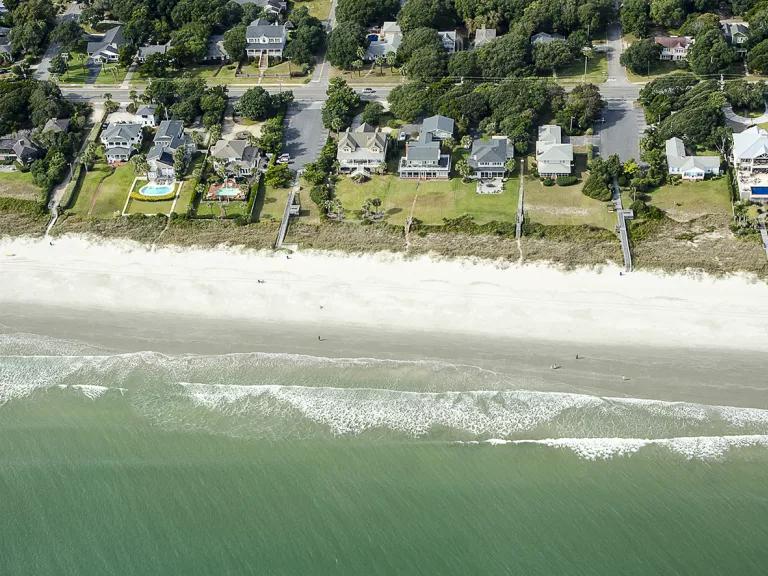
Beachfront homes in Myrtle Beach, South Carolina
Craig McCausland/iStock
- NRDC represented residents of Dickson, Tennessee, in a landmark environmental justice case to address toxic chemicals in groundwater under residents’ homes. We obtained a legal settlement that required new water supplies and enhanced water- and air-quality monitoring.
- NRDC has helped push North Carolina forward as a leader in energy efficiency and solar energy. With our encouragement, the state has signed on to the U.S. Climate Alliance and pledged to meet the goals of the 2015 Paris Agreement, despite former president Trump’s decision to withdraw the United States from the accord. In addition, Governor Roy Cooper has committed to developing a state resilience plan and reducing economy-wide greenhouse gas emissions by 40 percent by 2025.
- NRDC and our local partners have slowed down the expansion of fracked gas pipelines across Virginia and North Carolina. We are also supporting coastal communities across the Southeast by fighting the former Trump administration’s plan to open U.S. waters to offshore drilling—which would threaten marine life, injure regional economies, and exacerbate global warming.
- At North Carolina Utilities Commission proceedings, NRDC is collaborating with regional advocates to push for improved energy efficiency and renewable energy programs, energy rates that deliver clean energy benefits, and financial incentives for utilities that are aligned with the public interest. With local partners, NRDC is also fighting to ensure dirty, destructive, and expensive forest biomass projects have no place in the state’s Clean Energy Plan.
- Through the Strong, Prosperous, and Resilient Communities Challenge (SPARCC), NRDC is working with partners in Atlanta and Memphis to support inclusive, equitable, climate-wise, and healthy community development. SPARCC offers training and technical assistance, capital, and a learning community, expanding our regional partners’ capacity to transform their built environment so that people of all races and incomes can benefit and thrive.
- Through the Energy Efficiency for All initiative, NRDC is partnering with diverse stakeholders in states, including Georgia, Louisiana, and Virginia, to ensure affordable multifamily homes are energy and water efficient. This combined effort has resulted in nearly $500 million in additional funding for efficiency upgrades and continues to improve the quality of low-income rental housing.
- NRDC is teaming up with local partners and city officials in South Carolina to develop new, faster relocation assistance for owners of repeatedly flooded homes, as current federal disaster assistance programs can take years to reach recipients.
- Through Bloomberg Philanthropies’ American Cities Climate Challenge, NRDC is supporting the cities of Atlanta; Charlotte, North Carolina; Orlando and St. Petersburg, Florida; and Washington, D.C., to tackle their carbon reduction goals.
- In Virginia, NRDC has helped usher in a clean energy expansion, with a commitment from the state’s electric utilities to a decade-long, $1 billion investment in energy efficiency.
See Our Work in Other Regions
Arctic
Midwest
West
Puerto Rico
Canada

China Office
India
Latin America
Latest News & Commentary

Blue Whales Ply the Northeast Canyons and Seamounts; Industry Could Soon Too

A Fund for Cleaning Up Coal Mining’s Toxic Legacy Dries Up

16 Years after Deepwater Horizon, We’re Charging in the Wrong Direction

The God Squad from Hell: Trump Convened Committee to Greenlight Extinction

Battleground Pennsylvania: What We’re Really Talking About with Energy Affordability and Data Centers

In North Carolina, Opportunities to Protect People—Not Just Insurance Profits

Courts Blow Back the Trump Administration’s Offshore Wind Freeze

From a Whisper to a Murmur to a Chorus: It’s Time to Make Polluters Pay for the Climate Crisis

A Glass Half Full? The State of New York’s Lead Pipes in the '27 Budget

Unprecedented: Pennsylvania’s RGGI Repeal
Latest Policy Resources
Water Shutoffs—New NRDC Map Shows Hot Spots Across New Jersey

Unlocking the Grid

Preventing Heat Deaths on the Job with State Standards
Offshore Drilling 101

Power for the People

Save the Rice’s Whale in the Gulf of Mexico

North Carolina Workers Need Commonsense Heat Protections
Polling on the International Plastics Treaty
Clean Electricity in States Across the United States: The Impact of the Inflation Reduction Act and Carbon Pollution Standards on States’ Electricity Futures